I walked into the Broad Street, Lagos branch of Guaranty Trust Bank, and behold, there was a man in white playing a baby grand piano. It was novel. Prior to this, we all used to queue inside the bank with tally numbers and a card, waiting for almost eternity to be served. Banking was tedious and cumbersome. It was manual and hectic, and then voilà, GTB appeared.
It was a first in what was then known as new generation banks. It brought a certain zest into banking. It was truly new generation—computerized, easy-breezy, as some will say—and with a new crop of young bankers who dressed the part, smiled, and encouraged you to bank.
It was a new dawn in banking, and Nigerians fell in love. Before you knew it, and as is always the case, copycats emerged, and the whole place was littered with new generation banks, with people dressed to the “nines,” and we started calling the other banks older generation.
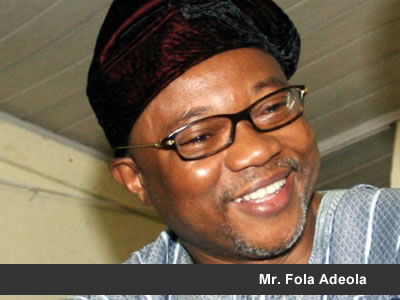
It was Fola Adeola and his late partner, Tayo Aderinokun, who were behind this new wave. Fola was the young, handsome, light-skinned, brainy go-getter who was the pioneer Managing Director of what has now become a multi-trillion-naira financial behemoth.
He and his partner became the rock stars of banking. They were feted, celebrated, and spoken about in a very admirable manner, and this gave Fola, especially, who was the public face, certain power and influence.
Before you even knew it, he had left. Oh my God, Fola had completed his tenure and left. Who does that? Which Nigerian understands the meaning of “tenure” in his bank? A bank he birthed with sweat and blood? He must be mad, we all echoed, as the news that the golden boy of new banking had just packed his bags and left, handing over to Tayo.
Fola understood corporate governance long before most of us could spell it. He understood succession, amongst other ethos, that corporates need to be institutionalized and outlive their founders, and he made his move straight into immortality.
Today, his successors build all sorts of contraptions to outstay themselves. From HoldCo to group structures to everything—his successors, both at GTB and in other establishments, have become even more creative than Shakespeare in designing thin-legged structures to keep themselves in power till they lose their teeth.
Not for Fola, who till today remains quite legendary and simply more influential than most. From banking, he tried himself in politics, attempting to bring the beauty of his thoughts on a national scale, but Nigeria flogged him. He didn’t tarry but headed the most robust pension reforms on the continent, solving a pension crisis that had festered for decades. His committee birthed the contributory pension scheme that removed the heavy load of defined pensions that dropped a super-heavy baggage on government. Today, that work has led to a multi-trillion-naira pension fund that has kept Nigerians looking forward to their retirement and wiped out the long queues where pensioners went to die.
Like every other banker, I was enamoured by Fola and never really got to meet him, except flashes of him at events, where I would stay very far and ogle at him. He was an electric personality who smiled a lot, made friends very easily, and didn’t wear his brilliance on his shoulder.
Then something happened, and he finally opened his door to me. GTB was celebrating a milestone, and he was not invited. Now the public was not sure if he was invited and forgot to go or if he was snubbed. Whatever the case, I would not take it, and I fired a diatribe at the present management, asking them a very simple question but with fire and poison laced in it—how dare you? The write-up went viral as GTB alumni and the general public kept passing it around, and almost every Nigerian read the article. I was getting comments like—Duke of Shomolu, you are fearless o; aghhh Duke of Shomolu, they will bite you o.
Then I saw the comment on my phone—thank you. I had had his number saved for eons but didn’t dare to call or chat. When the chat dropped, I looked very carefully and read it over and over again and started showing the whole world—see what Fola Adeola sent to me—and people started hugging me and carrying me on their shoulders, and I was very proud of myself. Mbok see me oooo, Fola don send me thank you, and I felt like a World Cup winner.
Then I started sending him my articles, and he would read and not respond, and then after over a year of sending him my articles, he replied again—thank you so much for sending me these articles—and I jumped up again and screamed. Oh my God.
Why wouldn’t I scream? He was a personal hero. A man admired and respected by all, and here he was sending me one-liners. Mbok, I will scream o.
Then one day he said—take me for dinner, choose the restaurant, venue, and date—and I said, ok my Lord, allow me start a savings plan and then combine it with a GoFundMe campaign, and I will be ready for you. The date has not happened, but he was gracious enough to come see my last play—Obey—and at the end, he said well done, send me your account number. Nice guy.
Tajudeen Afolabi Adeola was born January 10, 1954. He is a Nigerian businessman, investor, and philanthropist, best known as the co-founder of Guaranty Trust Bank (GTBank) and founder of FATE Foundation, a leading entrepreneurship support organization in Nigeria. He is widely regarded as one of the pioneers of modern banking in Nigeria.
He attended Methodist Boys’ High School, Lagos, and from there moved to Yaba College of Technology in 1975, where he secured a Diploma in Accounting.
He became a Chartered Accountant (1980) after training with Deloitte, Haskins & Sells and D.O. Dafinone & Co.
He later strengthened his qualifications with professional development programs at Harvard Business School, INSEAD (France), and IMD Switzerland.
He co-founded Guaranty Trust Bank Plc (GTBank) in 1990 with Tayo Aderinokun and served as GTBank’s first Managing Director/CEO until 2002, establishing the bank as a model of corporate governance and innovation in Nigeria’s financial sector.
He founded FATE Foundation in 2000, a non-profit that supports aspiring entrepreneurs through training, mentoring, and funding.
Veering into public service, he was named a member of the National Pension Reform Committee (2004), which designed Nigeria’s contributory pension scheme.
He also served on the Commission for Africa, initiated by former UK Prime Minister Tony Blair.
At some point, he became Chairman of ARM Holdings Ltd. and served on the boards of several Nigerian and international organizations.
He has been awarded the Officer of the Order of the Federal Republic (OFR) by the Nigerian government.
He has also been frequently cited as a role model for ethical leadership in business.
He is married with children and is also widely known for his philanthropy and commitment to youth empowerment.
Duke of Shomolu
Fola Adeola’s entry into the Maddtimes power list Coffee table
Last modified: February 17, 2026