The last time I saw Kokoro was at Sabo Bus Stop in Yaba.
He was dirty, with no shoes on.
His clothes were torn, and he had lesions on his skin.
He was tall and blind, and he had greenish mucus coming out of his eyes and lame spittle dripping from his mouth as he banged at the ever-present tambourine.
Almost everybody at the bus stop that day didn’t know who he was, and the few that had heard of him would not have recognized him.
I knew him and recognized him. I had watched him on several NTA shows and had come to love his melodious voice that rang through each time he opened his mouth.
The fact that he was blind gave him a special appeal to me.
Then, as I grew up, I would see him hang around the ever-plenty Owambe parties that littered Lagos.
He would stroll in and stand by the side and beat his tambourine and sing, with the little boy handling him, and people would throw morsels of food at him, and the little boy would scamper and hand them over to him.
He would stop singing momentarily to eat and then continue.
Don’t know if he ever waxed an album.
Don’t know if he ever had his own concert, but his voice earned him respect and influenced such giants like King Sunny Ade, making him, in some circles, the progenitor of the genre.
That evening at Sabo Bus Stop, I watched as motorists stretched out their hands and placed money in his hands and then drove along.
When he was tired, he walked towards the Herbert Macaulay statue and turned beside it and started walking towards Nnamdi Azikiwe’s West Africa Pilot newspaper building, which is still standing.
Then I made to cross from the other side to follow him to see where this giant would lay his head that night, and then I lost him.
By the time I got to the other end, I could no longer find him, and all efforts to get his location from the fruit sellers and “Mallams” who were selling sex-enhancement herbs failed.
I lost Kokoro that day, and before you could say Jack Robinson, he died.
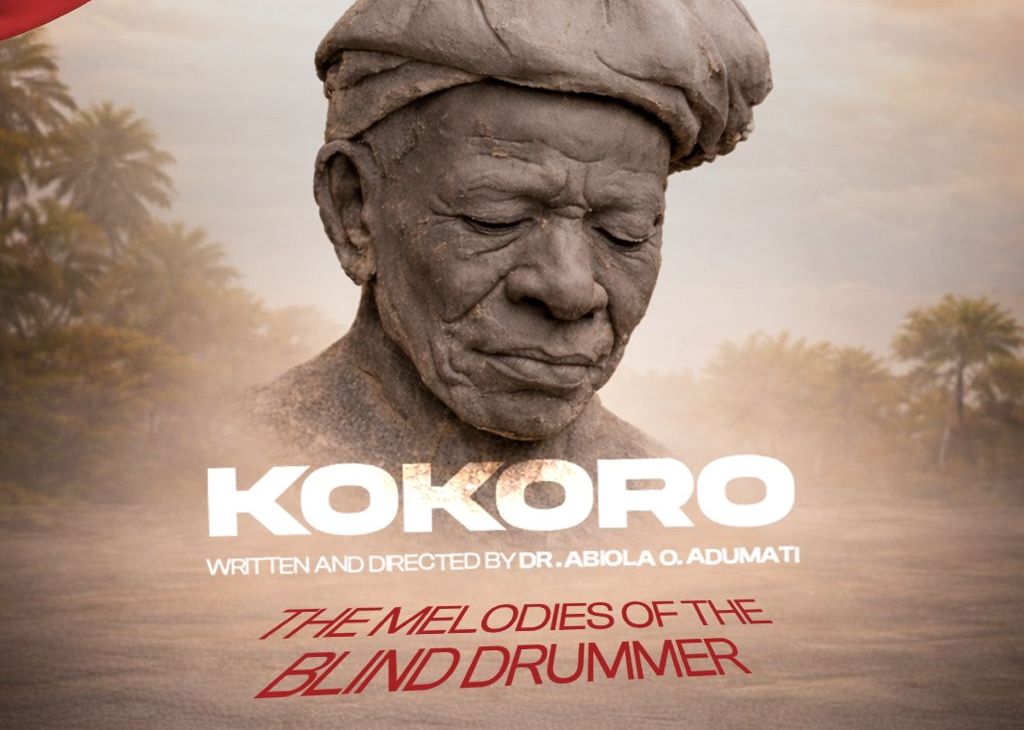
Dr. Adumati, I hear, is one of the most brilliant female theatre directors in the land, and she has gone to Kokoro’s roots in Owo, Ondo State, and spoken to his king and his kinsmen and has come out with a script that gave me goose pimples.
I promise not to watch any rehearsals so that I won’t lose the magic of the story, and I will sit in the hall and wait to see if I would hear the voice I last heard at Sabo Bus Stop that night.
Kokoro is written and directed by Dr. Adumati of Adekunle Ajasin University, and it’s part of the six-play series — plays all directed by female directors — dubbed “Powerfully Unapologetic.”
Kokoro will play at the Agip Recital Hall of the MUSON Centre this Easter.
Woman director, 70% women cast and crew, woman Executive Producer, you would wish you were a woman
Duke of Shomolu
Last modified: February 12, 2026