I write not as an economist or a sociologist but as a keen observer of the Nigerian socio – economic space
Basic economics tells us that economic delineations can be divided into three major broad categories – the upper class, the middle class, and the challenged
With these three broad categorisations, we can further drill down – like upper middle class, lower middle class, niche rich, peasants, etc
The vast majority of people in this country are in the last category, which is the challenged
A significant number of our people – some authorities have said about 70% are economically challenged
They can be labelled as poor with no access to the basics – food, shelter, health, education
For this write-up, however, my interest is in the relatively new categorisations that have been listed as urban poor
Our middle-class categorisation was fuelled during the oil boom of the 70s
That era threw up a fresh wind of Nigerians who were well educated, better positioned and with very firm economic aspirations
They went to tertiary institutions, travelled abroad to further, got good jobs, lived in urban enclaves and took very good care of their families within the framework of brilliant health and educational infrastructure
But as the 80s wore down and the economy started to peter out, Shagari threw in his austerity measures, and this middle class evaporated
We now had just two broad classes – the poor and the rich, with their different internal categorisation
Then the Obasanjo Presidency came up with its reforms, which now opened up the economy, and the middle class started rejuvenating again
His banking and pensions reforms, his huge telecoms revolution and his strict anti-corruption stance rebuilt the economy and gave life back to the middle class
For the first time in a while, Nigeria became a powerful destination with our people relocating cos of the better opportunities that were opening up
The new middle class could constructively aspire to a better quality of life without too much pressure, and this further gave fillip to strategic sectors of the economy like Real Estate, construction, Health, Education, Agriculture, Finance, to mention a few
Since he left, the middle class now went under strain as they were buffeted by wonky Government policies, poor implementation, a steep rise in corruption, and a continued dependence on a mono-product economy, amongst others
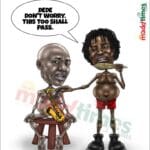
Following consistently poor economic management from Jonathan to the present Tinubu-led administration, the middle class, which is supposed to be the bastion of the economy, has now transformed into what we now categorise as the Urban poor.
The urban poor, in my estimation, now carry as much as 60% of our total population, as we can be found in all urban areas of the economy
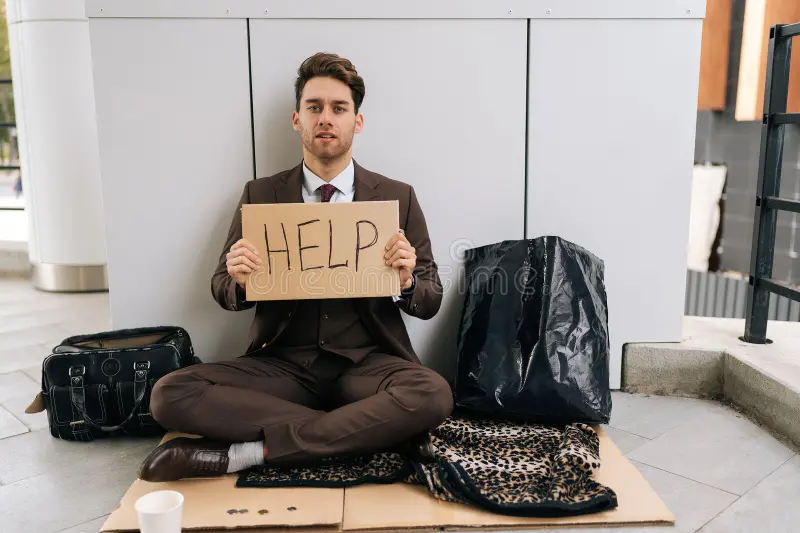
The categorisation covers the Bank MD down to the clerk in an office who wears a suit and tie but lives in Agbado and treks to work
The urban poor live in poorly constructed cities, with debilitating infrastructure, poor access to good water, poor access to quality education, poor access to good health, a poor environment, with inefficient transportation system, with a thick population density and one of the highest stress levels in the world
This leads to poor mortality rate, with ours being put by some authorities at 62 years of age, amongst others
The real rich who make up less than 5% of the economy hole up themselves in luxury enclaves like old Ikoyi, build their own infrastructure, and have their own health care system both locally and internationally. They basically just live in a separate country within the country
Yes, you may have noticed that I have put Bank MDs at the top echelon of the urban poor, and I will explain
The most annoying thing amongst the top echelon of the urban poor is the feeling that they are rich
Well, let me burst their bubble – they are far from it.
So when you aspire to a certain kind of lifestyle that is funded by corporate Nigeria or debt-driven, then you are not rich; you are a top-echelon urban poor
So the Bank pays your mortgage, educates your children, pays your International Health insurance, pays domestic staff, funds your lifestyle, basically does not make you rich
If you pull out Bank funding or debt and you can do all of these from your direct earnings and still have more left for investments and philanthropy, then you are rich
But sadly, a good 80% in that category and from all sectors, from finance to telecoms to governance, find it extremely difficult to fund their lifestyle independently once they pull out corporate and debt support
So today, we have a huge percentage of urban poor, and this has cascaded into severe challenges for the Nigerian state
Crime, apathy in the political process leading to incompetence in leadership, high morbidity, and even prison congestion
What can be done?
Solutions abound, but for this write-up, I would recommend robust macroeconomic policies of the Obj era that immediately opened up huge sectors and threw up opportunities that the people took advantage of.
Huge policies that would create a mass swath of employment, which now throws up millions of ‘server’ jobs impacting agriculture, finance, infrastructure and all, as we saw at that time
All these as against the nepotism-driven half-hearted kuli kulikuli and agbado variant which gulps billions without the expected cascading of benefits to the people
To achieve this, we must look very succinctly at Leadership and its purpose as the arrowhead of the rejuvenation
Will hunger and inordinate aspirations of the top echelon urban poor allow this?
I doubt, I really do doubt.
Come and beat me
Duke of Shomolu
www.dukeunfiltered.com
Last modified: July 20, 2026